
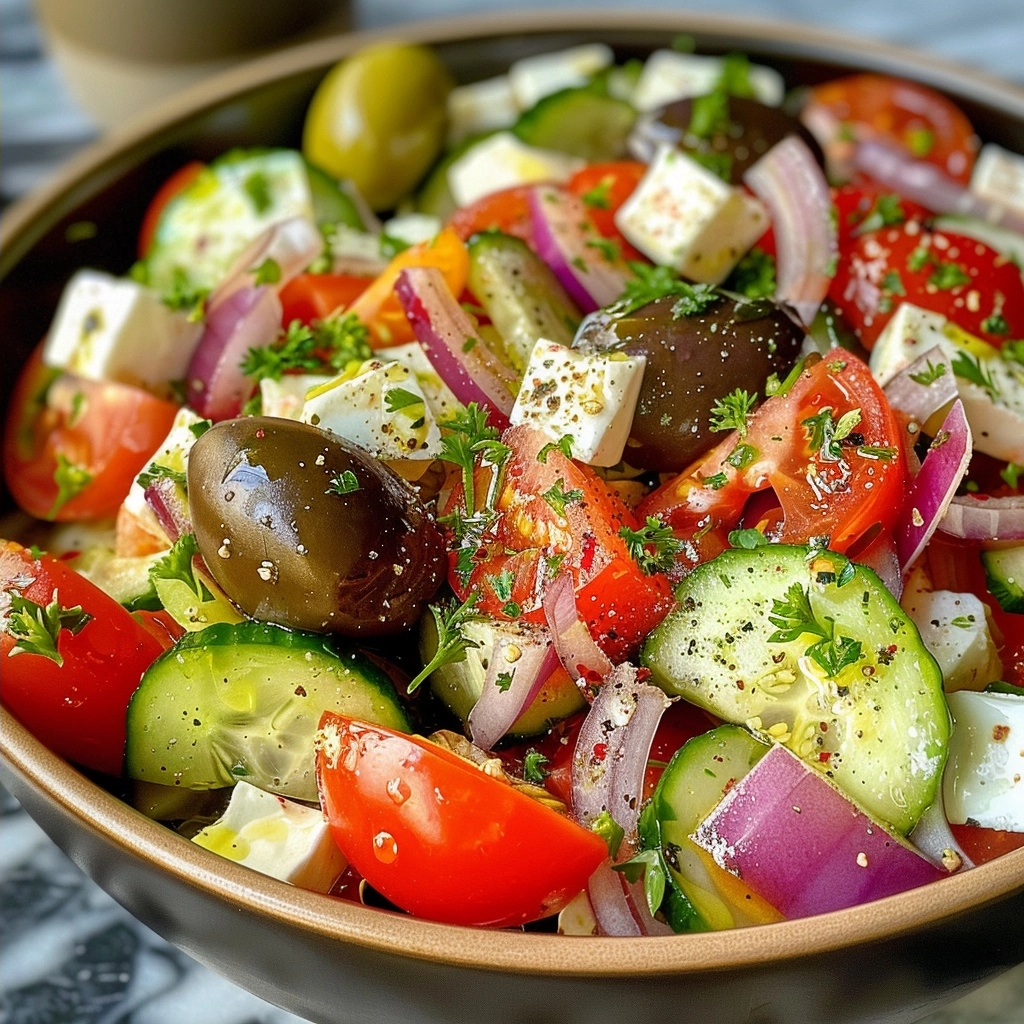
The best Greek Salad recipe combines crisp cucumbers, juicy tomatoes, kalamata olives, and creamy feta cheese to create an authentic Mediterranean staple. This vibrant dish relies on high-quality produce and a simple olive oil dressing to highlight the natural flavors of every ingredient. You will find this salad requires minimal effort while providing a refreshing addition to any meal.
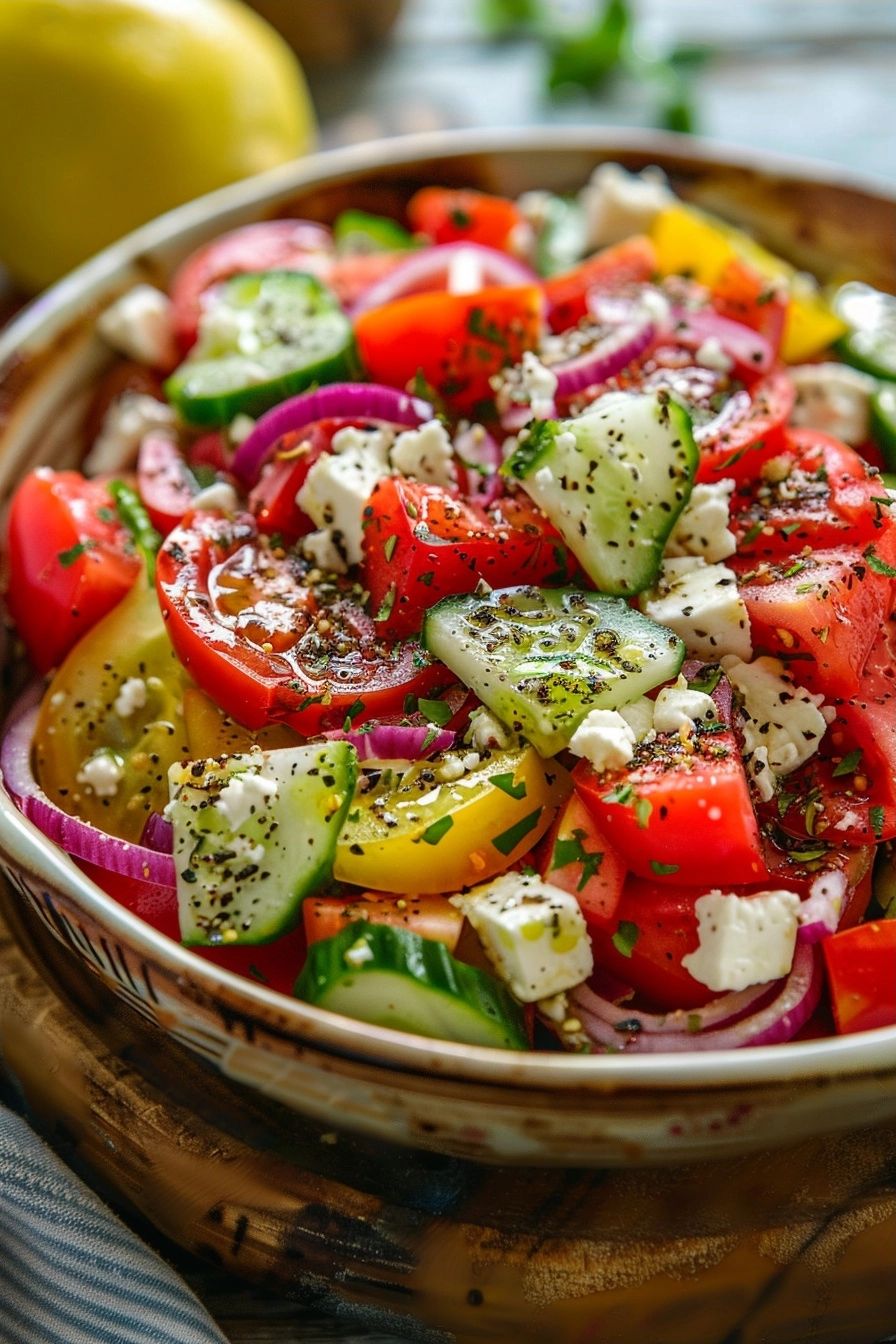
Recipe Overview
| Prep Time | Cook Time | Total Time | Servings | Difficulty | Cuisine |
|---|---|---|---|---|---|
| 15 mins | 0 mins | 15 mins | 4 | Easy | Greek |
Why This Recipe Works
This recipe works because it honors the tradition of the Greek village salad by avoiding lettuce entirely. By focusing on thick wedges of ripened tomatoes and crunchy cucumber slices, the salad maintains its structural integrity and bold taste.
My experience testing various ratios proves that the quality of the feta cheese block changes everything. Using authentic barrel-aged feta instead of pre-crumbled varieties provides the necessary saltiness and texture that defines a classic Horiatiki. The dressing acts as a simple bridge between the produce and the cheese, ensuring every bite remains balanced.
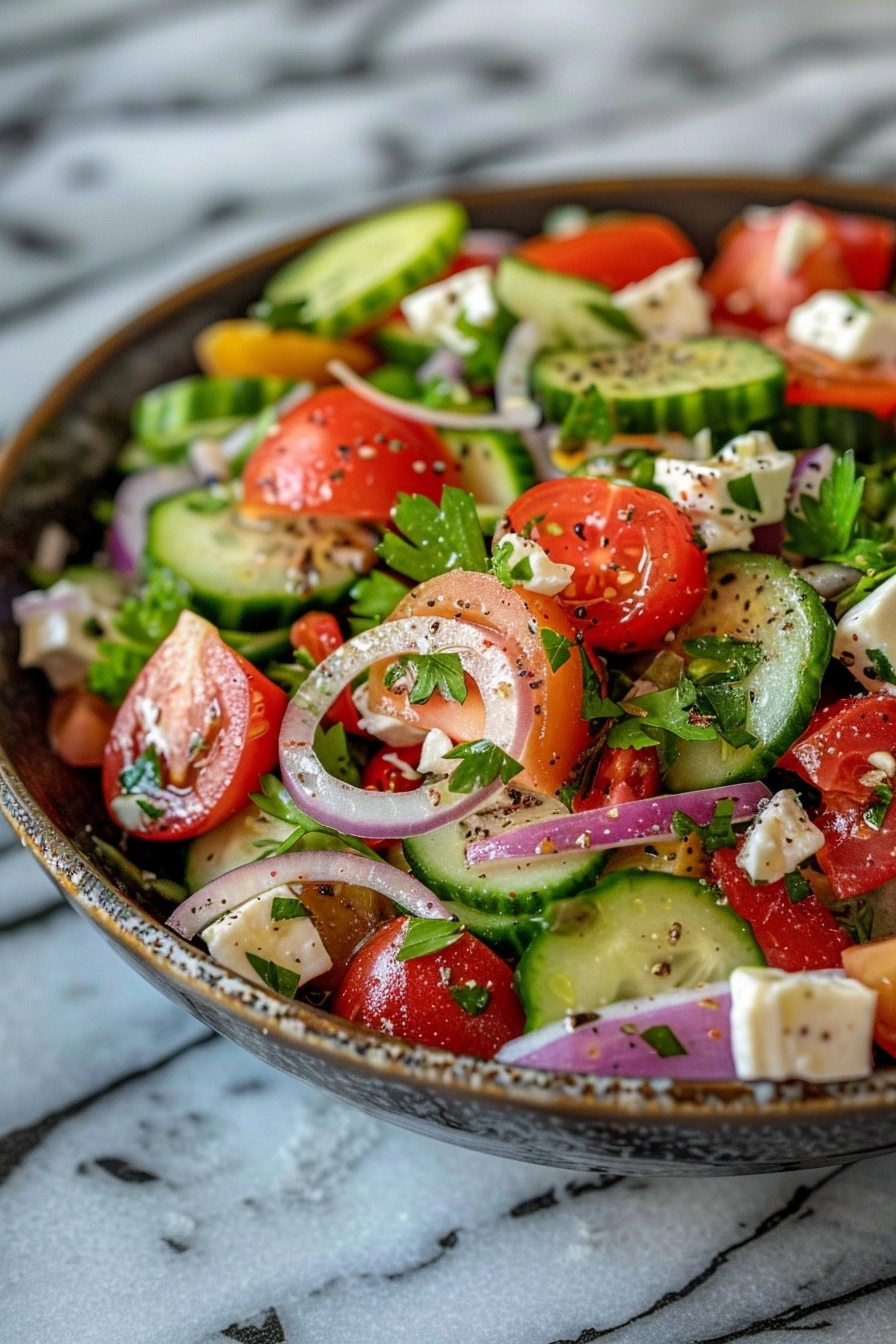
Ingredients
| Ingredient | Quantity | Notes |
|---|---|---|
| Tomatoes | 4 large | Use vine-ripened for best results |
| Cucumber | 1 large | English hothouse is preferred |
| Kalamata Olives | 0.5 cup | Pitted for convenience |
| Feta Cheese | 200g | Use a solid block |
| Red Onion | 0.5 small | Thinly sliced |
| Olive Oil | 4 tbsp | Extra virgin variety |
| Dried Oregano | 1 tsp | Greek oregano is optimal |
Step-by-Step Instructions
Preparing the Produce
- Wash the tomatoes and cucumbers thoroughly under cold running water.
- Chop the tomatoes into medium-sized wedges to retain their juices.
- Slice the cucumber into half-moons approximately one centimeter thick.
- Slice the red onion as thinly as possible to provide a sharp bite.
Assembling the Salad
- Combine the tomatoes, cucumbers, and onions in a large wooden mixing bowl.
- Add the pitted kalamata olives to the vegetable base.
- Drizzle the extra virgin olive oil evenly over the salad mixture.
- Sprinkle the dried oregano across the top of the vegetables.
Finishing Touches
- Place the whole feta cheese block on top of the salad mixture.
- Toss the salad lightly before serving to coat everything in oil and spices.
Chef Tips for Perfect Results
- Always select produce at peak ripeness to ensure a natural, sweet flavor profile.
- Keep the feta in one large block rather than crumbling it to prevent the dressing from becoming muddy.
- Use room temperature tomatoes because refrigeration destroys their distinct fragrant compounds and flavor depth.
- Wait to salt the salad until just before serving to prevent the vegetables from releasing too much water.
Common Mistakes to Avoid
One common mistake is adding lettuce, which results in a generic westernized salad rather than an authentic Mediterranean creation. The lack of greens is what allows the vegetable juices to mix with the dressing, creating a delicious base that you pick up with crusty bread.
Another error involves using poor quality olive oil, which can ruin the delicate balance of the dish. Stick to high-quality extra virgin olive oil to ensure a smooth, peppery finish. Do not refrigerate the tomatoes before serving, as the cold temperature mutes the vibrancy of the vine-ripened fruit.
Variations and Substitutions
| Ingredient | Substitution | Impact on Flavor |
|---|---|---|
| Red Onion | Shallots | Milder and more delicate bite |
| Kalamata Olives | Black olives | Less salty and more subtle |
| Dried Oregano | Fresh parsley | Adds a brighter, herbaceous note |
Serving Suggestions and Pairings
Serve this dish as a main course for light lunches or as a side with grilled chicken or roasted vegetables. It pairs excellently with homemade pita bread or crusty sourdough for soaking up the remaining dressing. Consider serving it during summer gatherings to provide a cooling contrast to hot main dishes.
Storage and Reheating
| Method | Duration | Instructions |
|---|---|---|
| Refrigerator | 24 hours | Store in an airtight container without feta |
Nutritional Information
Approximate values per serving:
| Nutrient | Amount per Serving |
|---|---|
| Calories | 185 kcal |
| Fat | 14g |
| Carbohydrates | 9g |
| Protein | 6g |
Frequently Asked Questions
Can I make this salad ahead of time?
You can prepare the vegetables and dressing ahead of time but should combine them just before serving. Salt draws out moisture from vegetables, so adding it later preserves the required crunchy texture.
What is a good substitute for feta?
You may use firm goat cheese or halloumi if you need an alternative to traditional feta. These options provide a similar salty and tangy profile while maintaining a firm structure.
How do I prevent the salad from becoming watery?
You prevent excess water by avoiding salt during the preparation phase and choosing the freshest produce. Using thick-cut vegetables also helps maintain structure and reduces the release of unwanted vegetable liquids.
Should I peel the cucumbers?
You should leave the skin on the cucumbers to provide necessary texture and visual contrast. If the cucumber skin feels thick or waxy, you may peel off thin strips to make it more palatable.
What is the best way to serve leftovers?
You should consume leftover salad within one day as the vegetables lose their freshness quickly. Use the remaining liquid as a base for an authentic vinaigrette or soak it up with a piece of quality bread.
Mastering this best Greek salad recipe requires minimal ingredients but maximum attention to quality. By focusing on vine-ripened tomatoes and authentic feta cheese, you create a dish that honors Mediterranean traditions. Serve this fresh, vibrant bowl at your next gathering to impress guests with uncomplicated yet bold, savory, and refreshing flavors.
Print
Authentic Greek Horiatiki Salad
- Total Time: 15
- Yield: 4 servings 1x
- Diet: Vegetarian
Description
Experience the true taste of the Mediterranean with this classic Horiatiki salad. By skipping the lettuce, this recipe focuses on the vibrant, sun-ripened flavors of juicy tomatoes, crisp English cucumbers, and tangy kalamata olives. Topped with a generous block of authentic barrel-aged feta and a light drizzling of premium extra virgin olive oil, this refreshing salad is the perfect side dish for any summer meal. Simple, nutritious, and undeniably delicious, it captures the essence of fresh, whole-food dining.
Ingredients
4 large vine-ripened tomatoes
1 large English hothouse cucumber
0.5 cup pitted kalamata olives
200g solid block feta cheese
0.5 small red onion
4 tbsp extra virgin olive oil
1 tsp dried Greek oregano
Instructions
Wash the tomatoes and cucumbers under cold running water.
Chop the tomatoes into medium-sized wedges to retain their juices.
Slice the cucumber into one-centimeter thick half-moons.
Thinly slice the red onion.
Combine the tomatoes, cucumbers, onions, and olives in a large wooden mixing bowl.
Drizzle the extra virgin olive oil evenly over the vegetables.
Sprinkle the dried oregano over the mixture.
Place the block of feta cheese on top of the salad.
Toss gently before serving to evenly coat with oil and spices.
Notes
Always use a solid block of feta rather than pre-crumbled for the best texture and flavor. For the best result, let the salad sit for a few minutes before serving so the juices from the tomatoes mix with the olive oil and oregano to create a light dressing.
- Prep Time: 15
- Category: Summer Desserts
- Method: No-cook
- Cuisine: Greek
Nutrition
- Serving Size: 1 plate
- Calories: 220
- Sugar: 5g
- Sodium: 750mg
- Fat: 18g
- Saturated Fat: 7g
- Carbohydrates: 9g
- Fiber: 2g
- Protein: 8g
- Cholesterol: 35mg