
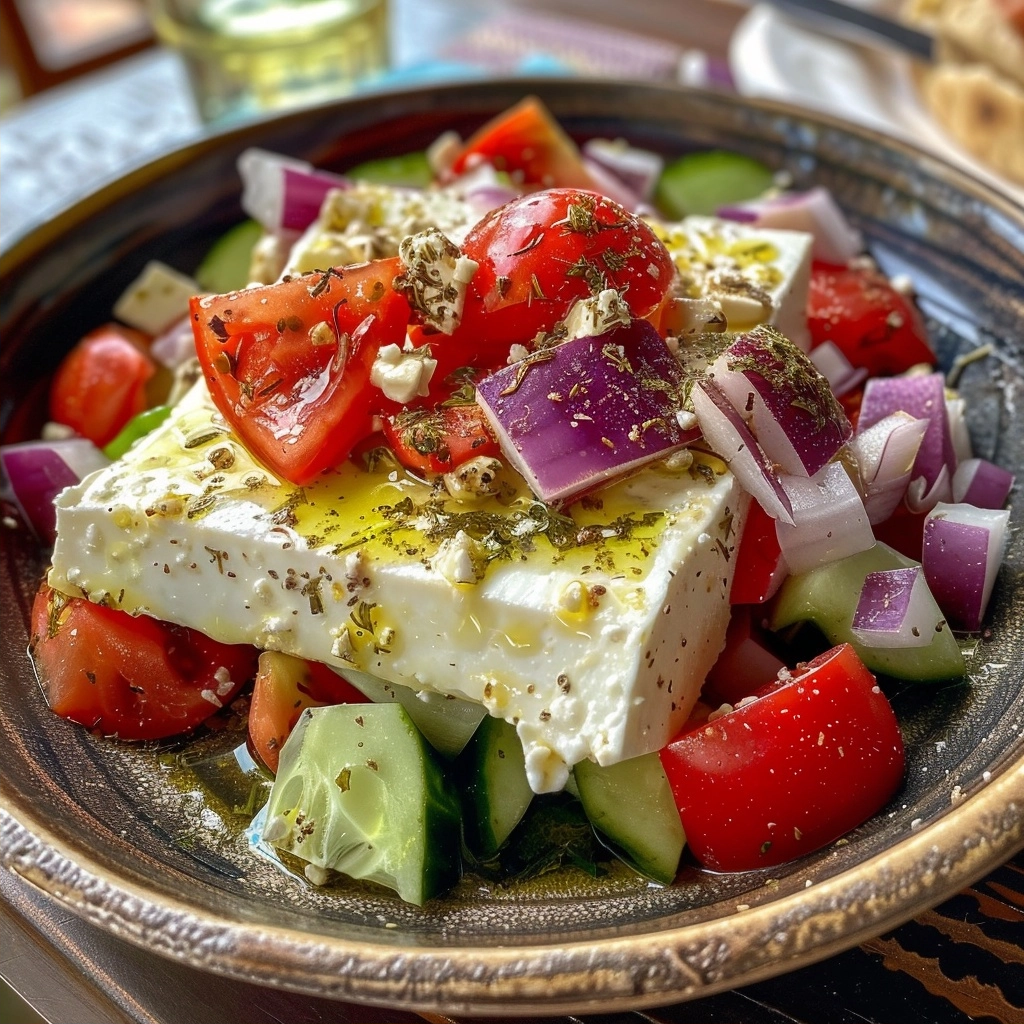
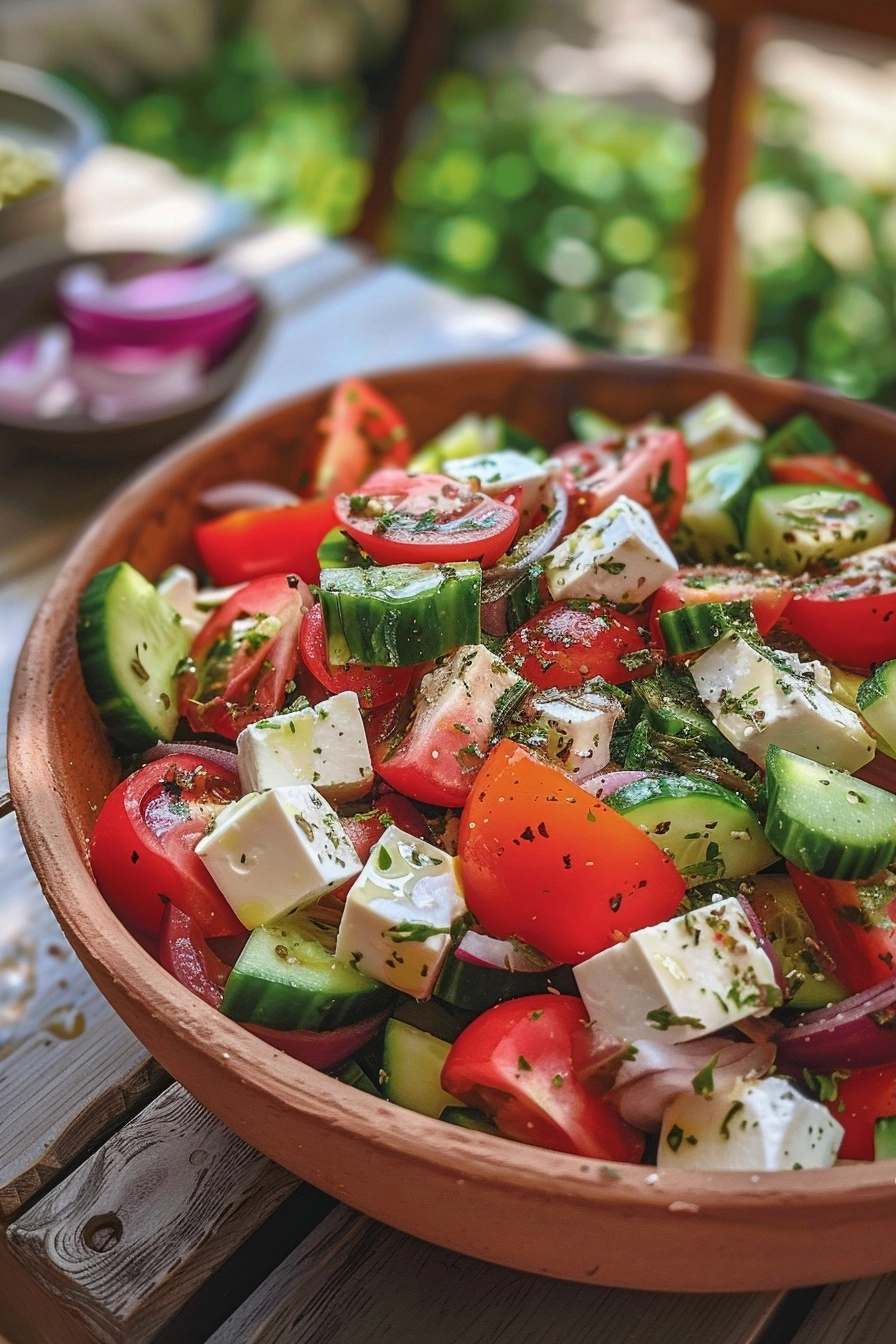
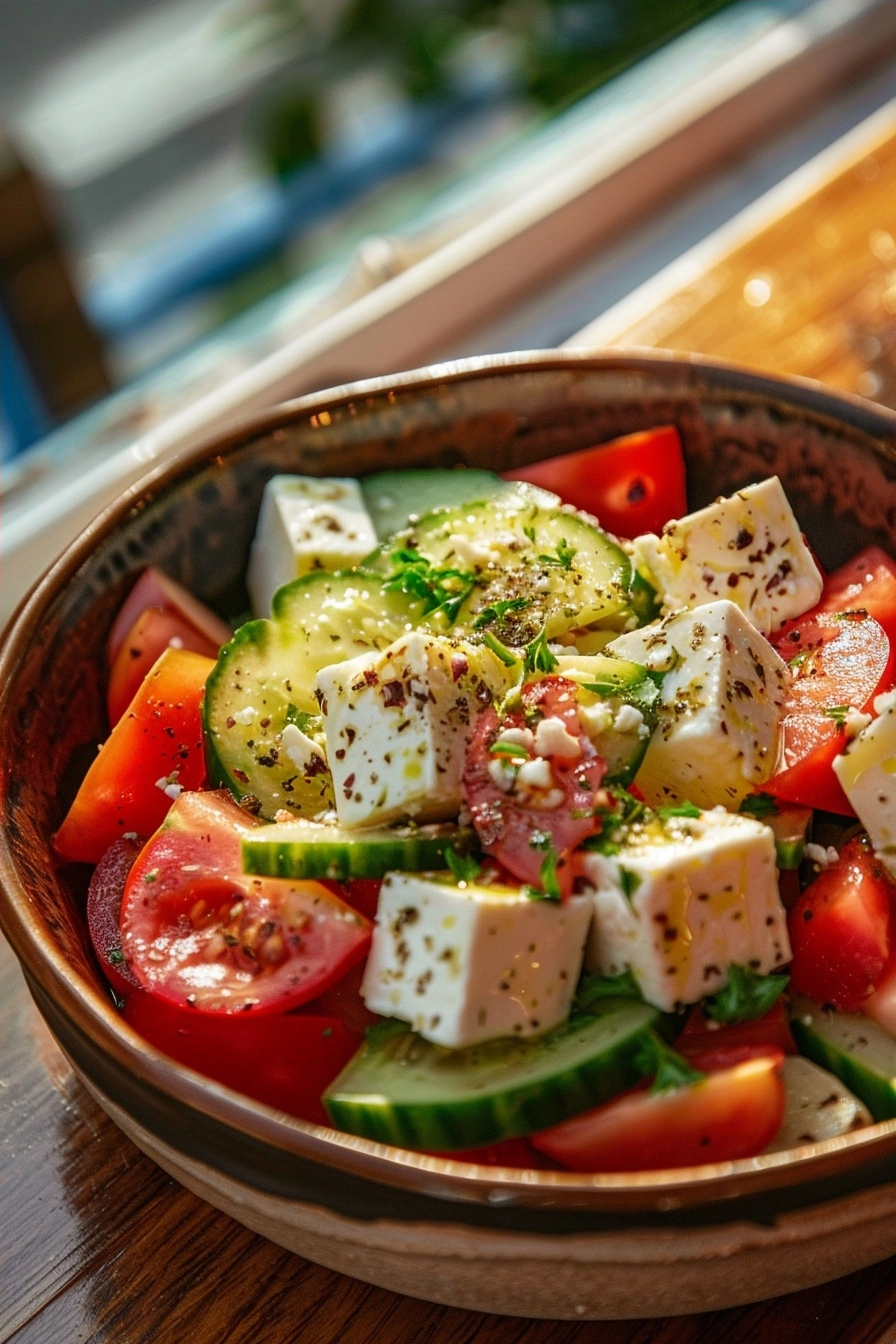
A Traditional Greek Village Salad consists of chunky fresh vegetables, quality olives, and a large slab of authentic feta cheese tossed in extra virgin olive oil. This classic Mediterranean staple relies on the freshness of summer produce and the simplicity of high-quality pantry ingredients. Follow this guide to recreate the authentic taverna experience in your home kitchen using garden-fresh tomatoes, crisp cucumbers, and pungent oregano.
Recipe Overview
| Prep Time | 15 minutes |
|---|---|
| Cook Time | 0 minutes |
| Total Time | 15 minutes |
| Servings | 4 |
| Difficulty | Easy |
| Cuisine | Greek |
Why This Recipe Works
This recipe provides a balanced flavor profile by emphasizing the marriage between acidic tomatoes and salty, creamy feta cheese. I discovered during my travels through the Cyclades that the secret lies in the quality of the olive oil and the thickness of the vegetable slices. Unlike lettuce-based salads, this dish holds its integrity without wilting, making it the perfect choice for outdoor gatherings or hearty weekday lunches.
My approach removes complex steps to ensure the natural juices from the vegetables create a delicious dressing base by the end of the meal. By prioritizing the structural density of the ingredients, every forkful delivers a consistent blend of textures. You find that this authentic method respects the culinary traditions of a simple village lifestyle while providing a sophisticated flavor experience.
Ingredients
| Ingredient | Quantity | Notes |
|---|---|---|
| Tomatoes | 4 large | Use vine-ripened for maximum sweetness |
| Cucumber | 1 large | Persian or English varieties work best |
| Kalamata Olives | 1/2 cup | Pitted for easier eating |
| Red Onion | 1/2 medium | Thinly sliced into half-moons |
| Feta Cheese | 1 block | Use Greek sheep milk cheese in brine |
| Extra Virgin Olive Oil | 3 tablespoons | Cold-pressed high-quality oil |
| Dried Oregano | 1 teaspoon | Greek mountain variety if available |
Step-by-Step Instructions
Preparing the Fresh Produce
- Wash all vegetables thoroughly under cool running water before drying them completely with a clean kitchen towel.
- Cut the tomatoes into large, irregular wedges to ensure they hold their shape during the mixing process.
- Slice the unpeeled cucumber into half-moons with a thickness of approximately one centimeter.
- Remove the outer skin and root end of the red onion before slicing it into thin, delicate rings or half-moons.
Assembling the Salad
- Place the prepared tomatoes, cucumbers, and onions into a large shallow serving bowl with light tossing motions.
- Scatter the kalamata olives evenly over the vegetable mixture to ensure distribution in every serving.
- Drizzle the extra virgin olive oil over the top of the vegetables to coat every surface lightly.
- Position the large block of feta cheese directly on top of the vegetables rather than crumbling it into pieces.
- Sprinkle the dried oregano generously over the feta and the surrounding vegetables to provide an authentic aromatic finish.
Chef Tips for Perfect Results
- Always use vine-ripened tomatoes at room temperature to ensure the flavor profiles remain vibrant and pronounced.
- Avoid using lettuce, as traditional Greek salads rely exclusively on cucumber and tomato for the base crunch.
- Slice the red onion thinner than the other vegetables to prevent the raw pungency from overpowering the salad.
- Let the salad rest for ten minutes after dressing so the tomato juices marry with the golden olive oil.
Common Mistakes to Avoid
- Over-mixing the salad causes the tomatoes to break down and creates a watery texture instead of a crisp bite. Keep the components distinct by tossing gently.
- Using pre-crumbled feta results in a dry flavor profile that lacks the creamy texture of barrel-aged blocks. Purchase feta stored in brine and slice it yourself.
- Adding balsamic vinegar creates an acidic profile that masks the subtle flavor of high-quality olive oil. Stick to high-quality extra virgin olive oil as the primary dressing.
- Refrigerating the salad immediately after assembly makes the olive oil congeal and mutes the intensity of the aroma. Serve at room temperature for the best results.
Variations and Substitutions
| Ingredient | Substitution | Impact on Flavor |
|---|---|---|
| Red Onion | Spring Onions | Adds a milder and fresher profile |
| Kalamata Olives | Amfissa Olives | Provides a meatier, slightly salty finish |
| Dried Oregano | Fresh Thyme | Creates a more herbal and delicate fragrance |
Serving Suggestions and Pairings
Serve this dish alongside warm, crusty sourdough or pita bread to soak up the leftover tomato and oil liquid at the bottom of the bowl. For a full Mediterranean experience, pair this with grilled chicken souvlaki or vegetable skewers seasoned with lemon and herbs. It works beautifully as a standalone lunch or as a side for heartier Mediterranean food staples.
Storage and Reheating
| Method | Duration | Instructions |
|---|---|---|
| Room Temp | 2 hours | Serve immediately for optimal freshness |
| Refrigerator | 12 hours | Store in an airtight container without cheese |
Nutritional Information
Approximate values per serving per the USDA guidelines.
| Nutrient | Amount per Serving |
|---|---|
| Calories | 210 kcal |
| Fat | 16g |
| Protein | 7g |
| Carbohydrates | 9g |
| Fiber | 2g |
| Sodium | 450mg |
Frequently Asked Questions
Can I use cow milk feta for this salad?
You can use cow milk feta, although sheep or goat milk feta provides a more traditional sharp tang. Sheep milk varieties hold their structural integrity better when kept in large blocks within the salad.
Why is my salad watery at the bottom?
The liquid at the bottom of the bowl is a combination of healthy tomato juices and olive oil that serves as a dressing. This mixture is intended to be captured by dipping bread into the bowl once the vegetables are gone.
How do I make this ahead of time?
Avoid assembling the salad ahead of time because the salt extracts moisture from the cucumbers and tomatoes quickly. Chop the vegetables separately and store them in the refrigerator, but wait to assemble and dress the salad until just before serving.
Should I peel the cucumbers?
You do not need to peel the cucumbers if you wash them thoroughly and slice them into thick pieces. The skin adds necessary crunch and a vibrant color that defines the aesthetic of a classic village salad.
How fine should I chop the ingredients?
Keep the ingredients in large, rustic chunks to maintain the texture and visual appeal of this traditional dish. Avoid dicing or finely chopping, as this compromises the intended mouthfeel of the fresh produce.
Mastering a Traditional Greek Village Salad requires minimal effort but extreme attention to ingredient quality. By selecting the best produce and allowing the salt and oil to do the work, you achieve an authentic Mediterranean staple. Enjoy this dish as the centerpiece of your table, knowing you have created a classic meal that prioritizes fresh flavor and simple preparation techniques. Keep your produce local and your feta authentic to preserve the intended culinary experience in every bite.
Print
Traditional Greek Village Salad
- Total Time: 15
- Yield: 4 servings 1x
- Diet: Vegetarian
Description
Experience the rustic charm of a classic Greek Village Salad. This authentic Mediterranean staple relies on the freshness of summer produce, featuring chunky vine-ripened tomatoes, crisp cucumbers, thinly-sliced red onion, and brined Kalamata olives. Topped with a large slab of creamy sheep milk feta and finished with a drizzle of premium extra virgin olive oil and a dash of mountain oregano, this refreshing salad is the perfect balance of salty, acidic, and crisp textures. No lettuce needed; it is simple, pure, and incredibly satisfying.
Ingredients
4 large vine-ripened tomatoes
1 large cucumber
1/2 cup pitted Kalamata olives
1/2 medium red onion
1 block feta cheese in brine
3 tablespoons extra virgin olive oil
1 teaspoon dried Greek oregano
Instructions
Wash all vegetables thoroughly under cool running water and dry them completely.
Cut the tomatoes into large, irregular wedges to retain their structure.
Slice the cucumber into half-moons approximately one centimeter thick.
Peel the red onion and slice it into thin, delicate half-moons.
In a large bowl, combine the prepared tomatoes, cucumbers, and red onion.
Add the Kalamata olives to the vegetable mixture.
Carefully place the whole block of feta cheese on top of the salad.
Drizzle generously with the extra virgin olive oil.
Sprinkle the dried Greek oregano over the cheese and vegetables before serving.
Notes
Ensure you use a high-quality, cold-pressed extra virgin olive oil to define the flavor. Do not remove the peel from the cucumber for added texture. Store any leftovers in an airtight container for up to 24 hours, though this salad is best enjoyed fresh.
- Prep Time: 15
- Category: Summer Desserts
- Method: No-cook
- Cuisine: Greek
Nutrition
- Serving Size: 1 plate
- Calories: 220
- Sugar: 6g
- Sodium: 750mg
- Fat: 18g
- Saturated Fat: 6g
- Carbohydrates: 12g
- Fiber: 3g
- Protein: 8g
- Cholesterol: 40mg