
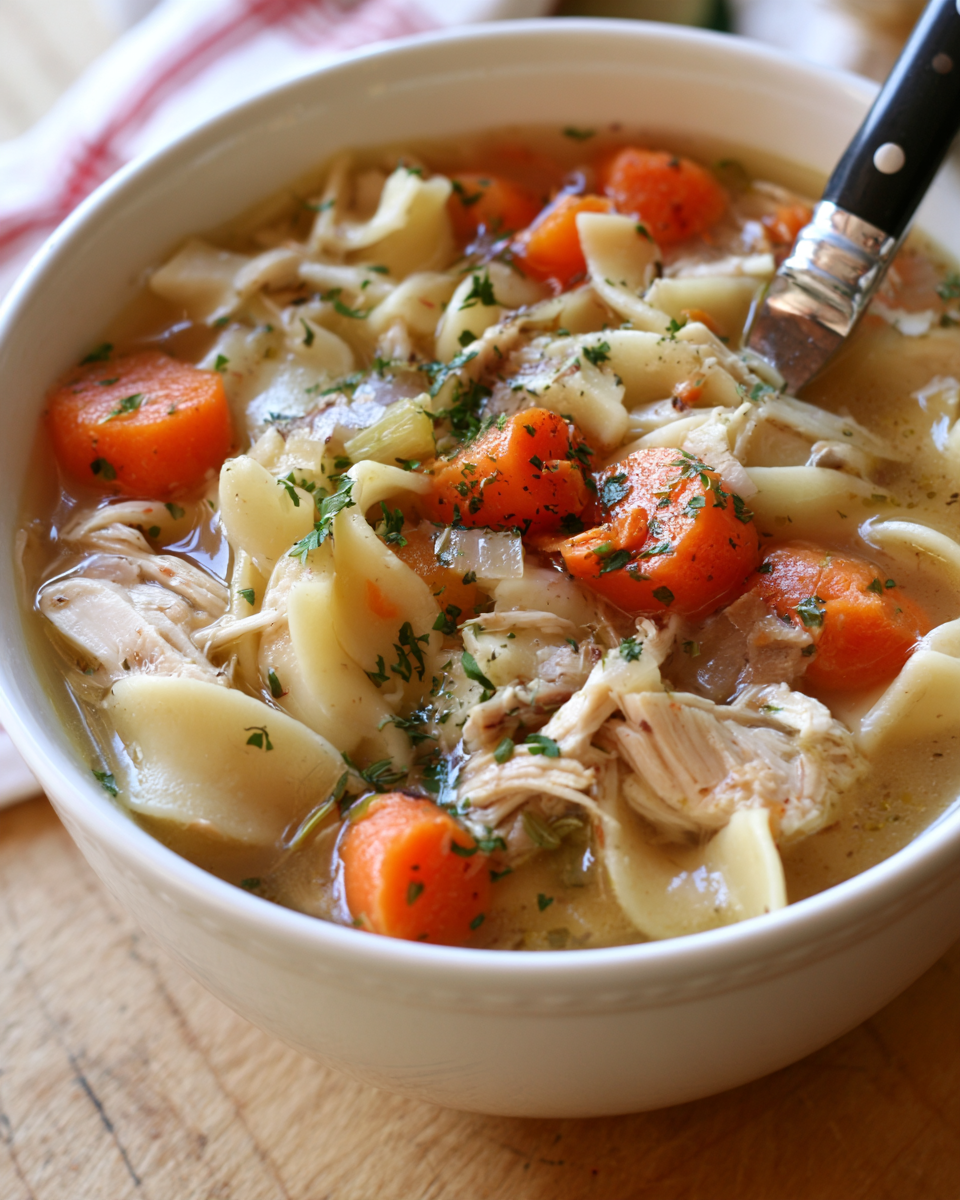
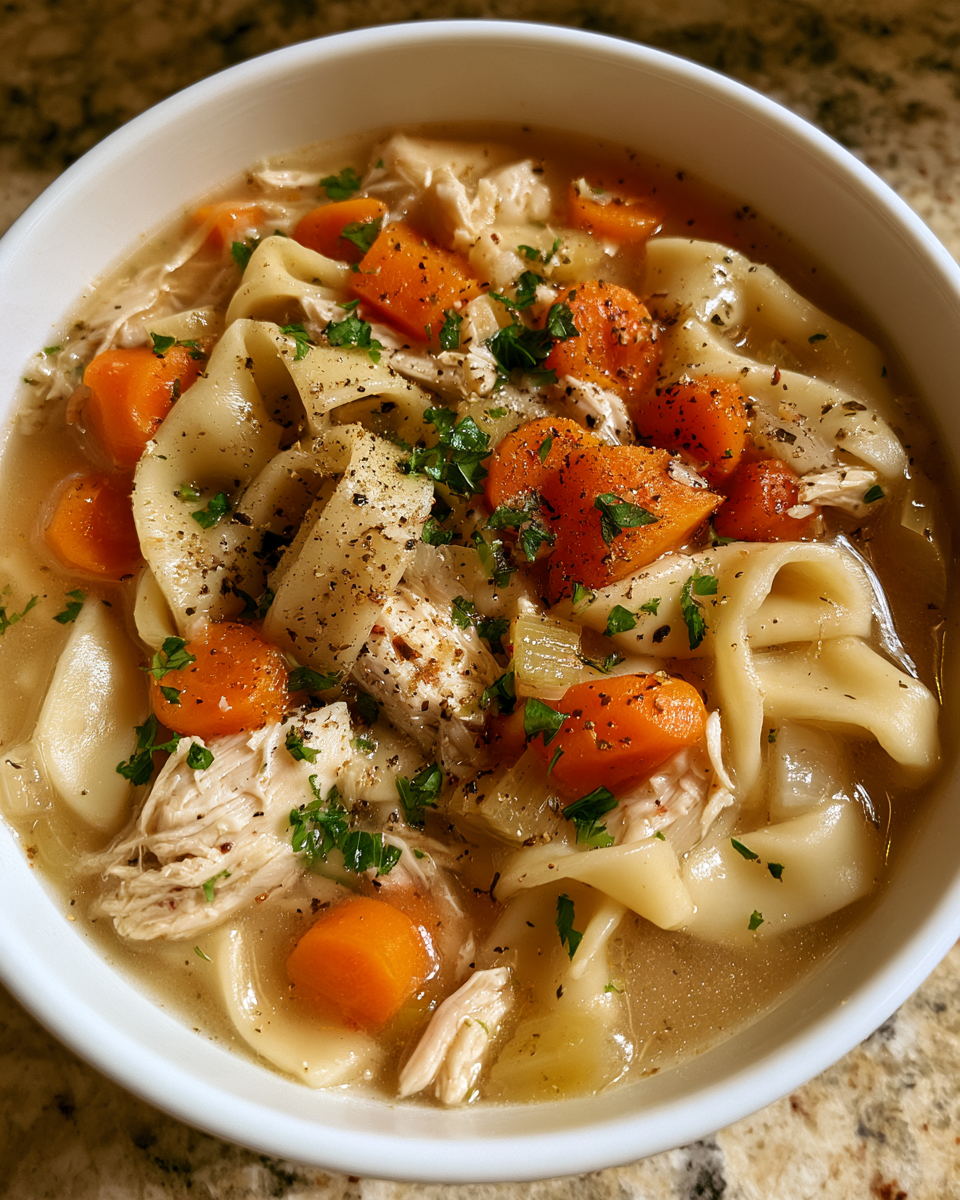
Chicken noodle soup with homemade noodles provides a comforting, protein-rich meal featuring tender poultry and elastic, hand-cut pasta. This classic dish relies on a rich, aromatic broth infused with garden vegetables and fresh herbs for maximum depth. Home cooks prioritize this recipe because the fresh dough creates a superior texture compared to store-bought dried varieties. This culinary staple delivers warmth and sustenance to any kitchen table.
| Prep Time | Cook Time | Total Time | Servings | Difficulty | Cuisine |
|---|---|---|---|---|---|
| 45 mins | 60 mins | 1 hr 45 mins | 6 | Intermediate | American |
Why This Recipe Works
This recipe works because the combination of a long-simmered broth and fresh egg noodles offers a texture profile impossible to achieve with processed ingredients. I developed this method after years of testing liquid-to-flour ratios, ensuring the noodles remain firm while absorbing the savory essence of the soup.
Using a whole chicken or bone-in thighs produces a collagen-rich liquid that coats the palate effectively. The hand-kneaded dough acts as a binder for the broth, thickening the soup naturally as the starch releases during the final stage of cooking.
Ingredients
| Ingredient | Quantity | Notes |
|---|---|---|
| Whole Chicken | 3 lbs | Substitute with 4 lbs chicken thighs |
| All-Purpose Flour | 2 cups | Measure using the scoop and level method |
| Large Eggs | 3 | Room temperature ensures better dough elasticity |
| Carrots | 3 large | Sliced into uniform rounds |
| Celery | 3 stalks | Finely diced for even flavor distribution |
| Fresh Parsley | 1/2 cup | Fresh leaves provide essential brightness |
Step-by-Step Instructions
Broth Preparation
Simmer the chicken in a large stockpot with eight cups of water for one hour.
Skim the foam from the surface to maintain a clear liquid base.
Remove the chicken to a cutting board once fully cooked through.
Add sliced carrots and celery to the boiling broth after removing the meat.
Noodle Assembly
Combine flour and eggs in a large mixing bowl until a shaggy dough forms.
Knead the dough on a floured surface for eight minutes until smooth.
Roll the dough into thin sheets using a rolling pin.
Cut the sheets into narrow strips using a sharp knife or pizza cutter.
Final Assembly
Shred the cooled chicken meat into bite-sized pieces.
Return the chicken to the pot with the vegetables.
Drop the fresh noodles into the boiling broth.
Cook for three minutes until the noodles float to the surface.
Chef Tips for Perfect Results
Use room temperature eggs to ensure the proteins hydrate properly without adding extra water.
Rest the dough for 30 minutes under an inverted bowl to relax the gluten before rolling.
Add the noodles in batches to prevent them from clumping together in the pot.
Finish the soup with fresh lemon juice to cut through the richness of the chicken fat.
Common Mistakes to Avoid
Overcrowding the pot causes noodles to stick together; cook them in controlled batches instead.
Using cold eggs makes the dough tough, so allow them to warm on the counter first.
Boiling the broth too aggressively makes the chicken meat stringy and dry.
Failing to salt the pasta water results in bland, unseasoned homemade noodles.
Variations and Substitutions
| Ingredient | Substitution | Impact on Flavor |
|---|---|---|
| Chicken | Turkey | Slightly earthier poultry profile |
| All-Purpose Flour | Bread Flour | Chewier, firmer noodle texture |
| Parsley | Fresh Dill | Adds a distinct, bright herbal note |
Frequently Asked Questions
Can I use store-bought flour for these noodles?
Yes, all-purpose flour works perfectly for creating reliable homemade noodles with a tender bite. High-protein bread flour remains an alternative if you prefer a chewier texture in your soup.
How do I know when the noodles are fully cooked?
The noodles are done when they float to the surface and maintain a slight resistance to the tooth. Avoid overcooking, as they will continue to soften while sitting in the hot broth.
What is the best way to store leftover soup?
Store leftovers in an airtight container in the refrigerator for up to three days. Note that the noodles will absorb more broth over time, so you may need to add extra liquid when reheating.
Why did my noodles turn mushy?
Noodles turn mushy when simmered for too long or if the dough was rolled too thick. Keep the boiling time under four minutes to preserve the integrity of the pasta structure.
Can I freeze the noodle dough?
You can freeze the unrolled dough disks wrapped tightly in plastic for up to one month. Allow the dough to thaw completely in the refrigerator before rolling to ensure it does not tear.
Mastering chicken noodle soup with homemade noodles elevates your kitchen repertoire significantly. By controlling the quality of your pasta and the richness of your broth, you create a dish that surpasses any commercial canned version. Follow these precise techniques, and you will enjoy a satisfying meal that showcases the timeless appeal of scratch-made comfort food. Your efforts yield a nutritious, warming bowl that never fails to please.