
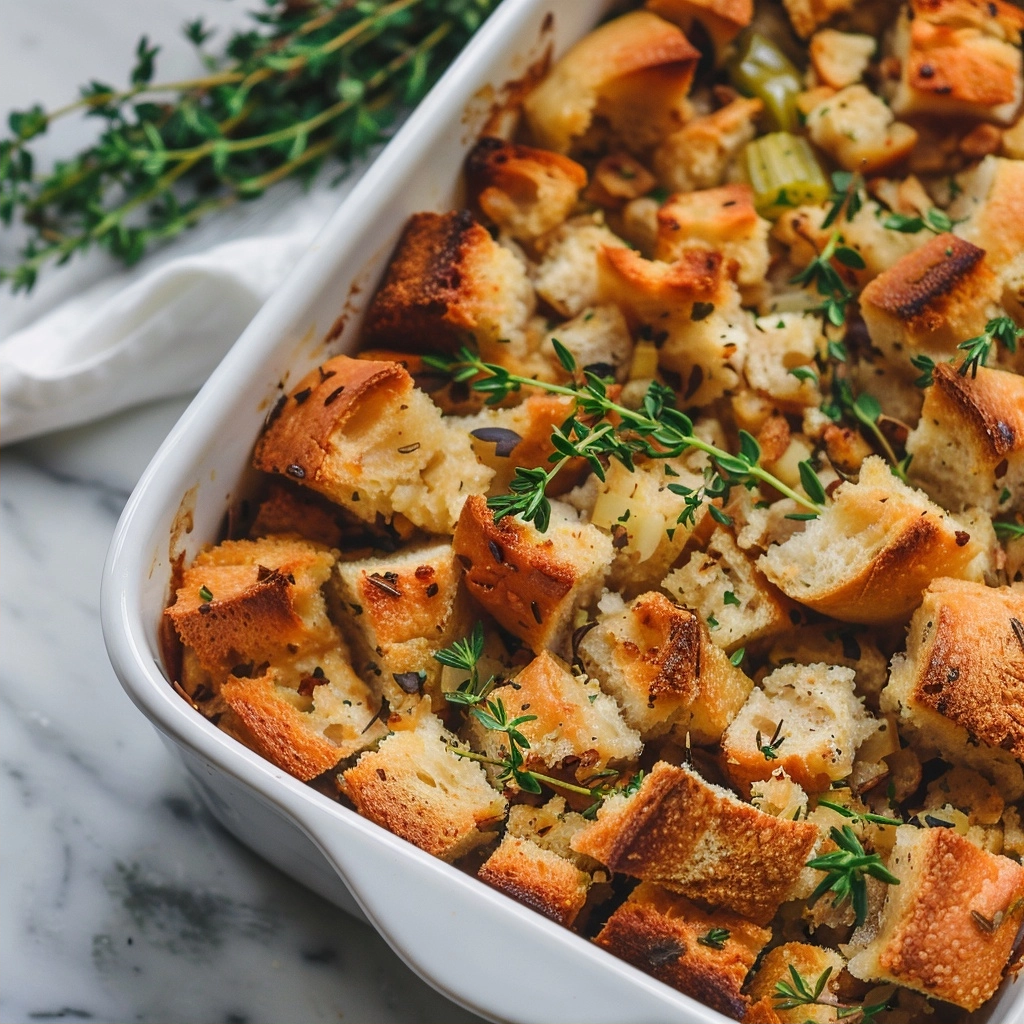
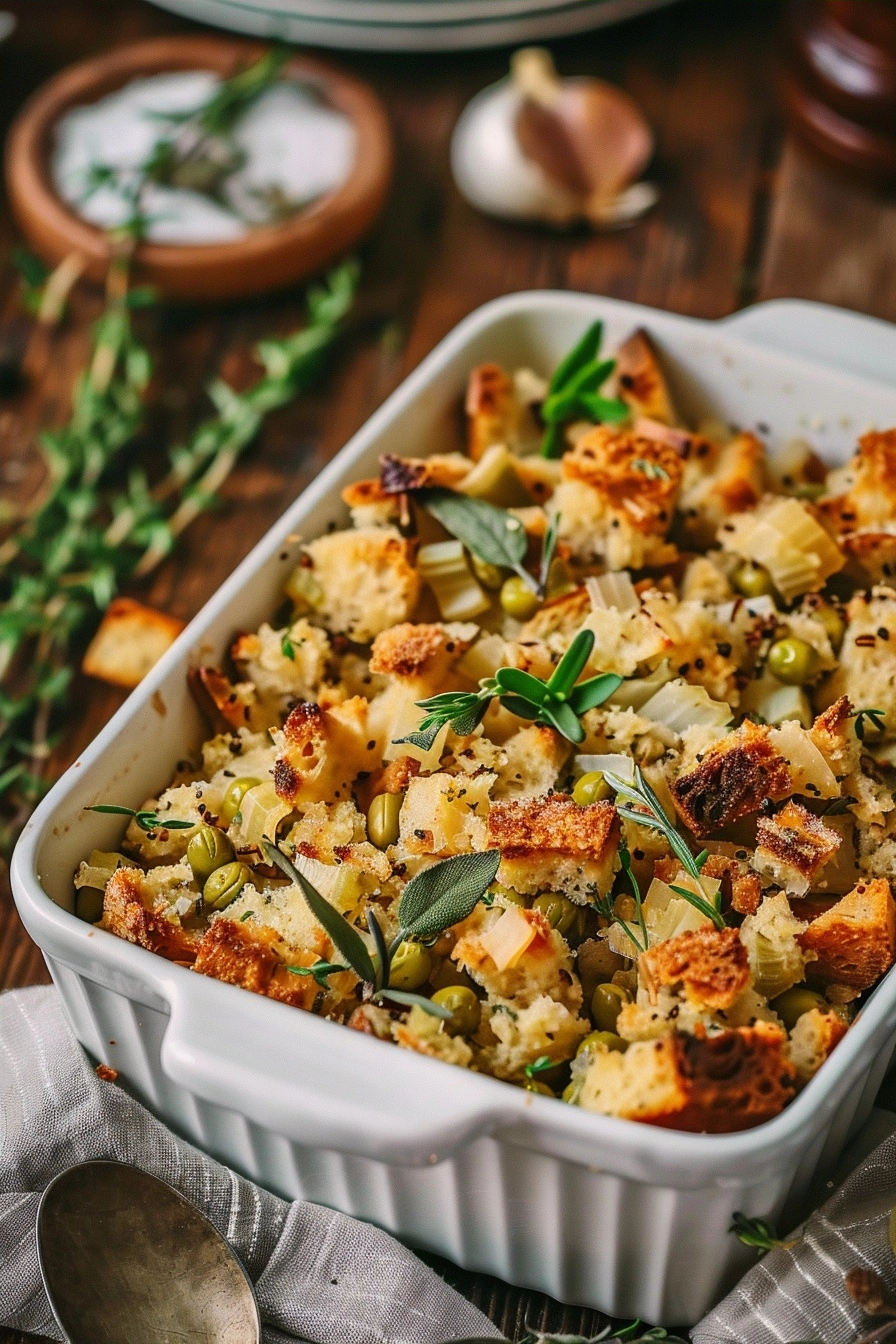
Homemade stuffing with sage and thyme is a classic savory side dish featuring crusty bread cubes, aromatic fresh herbs, and rich vegetable broth. This traditional recipe provides a moist, flavorful center to your holiday table without the need for meat-based stocks or fats. Its rustic appeal and earthy profile make it an essential accompaniment for roasted poultry or vegetarian main courses.
Recipe Overview
| Attribute | Details |
|---|---|
| Prep Time | 20 minutes |
| Cook Time | 45 minutes |
| Total Time | 65 minutes |
| Servings | 8 servings |
| Difficulty | Easy |
| Cuisine | American Traditional |
Why This Recipe Works
This recipe works because it relies on the perfect balance of moisture and texture achieved by using day-old bread. Fresh bread contains too much moisture, which results in a gummy texture, whereas stale, dry bread absorbs the seasoned broth while holding its shape inside the oven.
The combination of fresh sage and thyme creates an unmistakable holiday aroma that permeates every bite of this savory stuffing. By sautéing the onions and celery in butter until translucent, you build a foundation of sweetness that balances the woody notes of the herbs. This simple method ensures a consistent result every time you prepare it for family gatherings or festive dinners.
Ingredients
| Ingredient | Quantity | Notes |
|---|---|---|
| Stale Bread Cubes | 10 cups | Sourdough or country loaf |
| Unsalted Butter | 1 cup | Substitute with vegan butter |
| Yellow Onion | 2 cups | Finely diced |
| Celery Stalks | 2 cups | Finely diced |
| Fresh Sage | 3 tablespoons | Finely minced |
| Fresh Thyme | 2 tablespoons | Leaves stripped from stems |
| Vegetable Broth | 3 cups | Low sodium preferred |
| Salt and Pepper | To taste | Adjust based on broth sodium |
Step-by-Step Instructions
Preparation Phase
- Preheat your oven to 375 degrees Fahrenheit.
- Spread the bread cubes onto two large rimmed baking sheets in a single layer.
- Toast the bread cubes in the oven for 10 minutes until they feel dry and crisp to the touch.
- Transfer the toasted bread into a very large mixing bowl.
Cooking Phase
- Melt the butter in a large skillet over medium-high heat until it begins to foam.
- Add the diced onions and celery to the skillet, cooking until they soften completely.
- Stir in the fresh sage and thyme, cooking for one additional minute until highly fragrant.
- Pour the vegetable broth into the skillet and bring the mixture to a gentle simmer.
Baking Phase
- Pour the hot vegetable mixture over the toasted bread cubes in the bowl.
- Toss the mixture gently with a large spatula until every bread cube is moistened evenly.
- Transfer the stuffing into a buttered 9×13 inch baking dish without packing it down too firmly.
- Bake the stuffing covered for 20 minutes, then uncover and bake for 20-25 minutes until the top is golden brown.
Chef Tips for Perfect Results
- Use bread that is at least two days old to ensure it maintains structural integrity during the baking process.
- Do not skip the toasting step, as it prevents the bread from turning into mush when broth is added.
- Add an extra splash of warm vegetable broth if the mixture looks too dry before placing it in the oven.
- Cover the dish with foil for the first half of baking to steam the centers before crisping the top.
Common Mistakes to Avoid
- Over-mixing the ingredients causes the bread to break down into small pieces, which ruins the texture.
- Using high-sodium broth often leads to an overly salty final product, so always taste before seasoning.
- Packing the stuffing too tightly in the dish prevents heat circulation, resulting in undercooked patches.
- Skipping the sauté step for the vegetables leaves them crunchy and detracts from the overall flavor profile.
Variations and Substitutions
| Ingredient | Substitution | Impact on Flavor |
|---|---|---|
| Sourdough Bread | Cornbread | Adds a subtle sweetness and denser texture |
| Yellow Onion | Leeks | Provides a milder, more delicate onion flavor |
| Vegetable Broth | Mushroom Stock | Enhances the umami depth of the dish |
Serving Suggestions and Pairings
This stuffing pairs beautifully with roasted turkey or a centerpiece stuffed acorn squash for a vegetarian feast. Serve it alongside creamy mashed potatoes and roasted root vegetables for a balanced, comforting holiday dinner. The herbal notes complement cranberry sauce and steamed green beans with toasted almonds.
Storage and Reheating
| Method | Duration | Instructions |
|---|---|---|
| Refrigerator | 3-4 days | Store in an airtight container |
| Freezer | 2 months | Wrap tightly in foil and freezer-safe bag |
| Oven Reheat | 20 minutes | Cover and heat at 350 degrees Fahrenheit |
Nutritional Information (Approximate values)
| Nutrient | Amount per Serving |
|---|---|
| Calories | 240 kcal |
| Protein | 6g |
| Fat | 10g |
| Carbohydrates | 32g |
| Fiber | 2g |
Frequently Asked Questions
Can I make this stuffing ahead of time?
Yes, you can assemble the stuffing up to 24 hours in advance and keep it covered in the refrigerator. Bring the dish to room temperature for 30 minutes before baking to ensure even cooking throughout the center. This method allows the herbs and broth to fully penetrate the bread for a better flavor profile.
How do I know when the stuffing is done?
The stuffing is finished when the internal temperature reaches 165 degrees Fahrenheit and the top has become crisp and golden. You should notice that the edges have pulled away slightly from the sides of the baking dish. If the top browns too quickly, cover it loosely with foil for the remaining time.
Can I use gluten-free bread for this recipe?
You can substitute gluten-free bread as long as the loaf has a sturdy structure that can withstand liquid. Ensure the bread is dried out in the oven first, just as you would with traditional wheat bread. Some gluten-free varieties break down faster, so use slightly less broth to maintain the desired consistency.
What can I add to prevent dry stuffing?
Add a small amount of melted butter or extra warm vegetable broth to the mixture if it feels dry before baking. The goal is to have every cube moistened without becoming completely saturated or soggy. Adding diced mushrooms or extra celery also provides natural moisture during the cooking process.
How should I serve this for a large crowd?
Serve this stuffing directly from the baking dish to keep it warm for longer periods during your dinner. You can also transfer it to a pre-warmed ceramic serving bowl to maintain the temperature while guests help themselves. Provide a dedicated serving spoon to keep the portions neat and accessible.
Homemade stuffing with sage and thyme brings a sense of tradition to your cooking that store-bought versions simply cannot match. By focusing on high-quality fresh herbs and properly toasted bread, you create a side dish that anchors any celebratory meal. The fragrant combination of sage and thyme creates a lasting impression on your guests during every bite. Enjoy the process of crafting this rustic, flavorful dish for your next gathering and share the comfort of a home-cooked masterpiece with your loved ones.
Print
Homemade Stuffing with Sage and Thyme
- Total Time: 65
- Yield: 8 servings 1x
- Diet: Vegetarian
Description
A classic, comforting stuffing that brings the warmth of the holidays to your table. This vegetarian recipe features crusty toasted bread cubes, aromatic fresh sage, and fragrant thyme, all sautéed with celery and onions in rich butter. Perfectly moist on the inside with a delightful crisp top, it serves as the ideal side dish for any festive roast or holiday celebration.
Ingredients
10 cups stale sourdough or country bread, cubed
1 cup unsalted butter
2 cups yellow onion, finely diced
2 cups celery stalks, finely diced
3 tablespoons fresh sage, finely minced
2 tablespoons fresh thyme, leaves stripped
3 cups vegetable broth, low sodium
Salt and black pepper to taste
Instructions
Preheat your oven to 375 degrees Fahrenheit.
Spread bread cubes on baking sheets and toast for 10 minutes until crisp; transfer to a large mixing bowl.
Melt butter in a large skillet over medium-high heat.
Add onions and celery, cooking until softened and translucent.
Stir in sage and thyme, cooking for 1 minute until fragrant.
Pour the vegetable mixture over the toasted bread cubes.
Slowly add vegetable broth while tossing gently to moisten the bread without making it mushy.
Season with salt and pepper to taste.
Transfer to a buttered baking dish and bake for 35 minutes until the top is golden brown and crisp.
Notes
Use day-old or slightly stale bread for the best texture.
If using salted butter or standard vegetable broth, reduce the added salt in the recipe.
Cover with foil for the first 20 minutes if you prefer a softer texture, then remove for the final 15 minutes to crisp the top.
- Prep Time: 20
- Cook Time: 45
- Category: Baking
- Method: Baking
- Cuisine: American Traditional
Nutrition
- Serving Size: 1 cup
- Calories: 285
- Sugar: 4g
- Sodium: 450mg
- Fat: 14g
- Saturated Fat: 8g
- Carbohydrates: 36g
- Fiber: 3g
- Protein: 6g
- Cholesterol: 35mg