
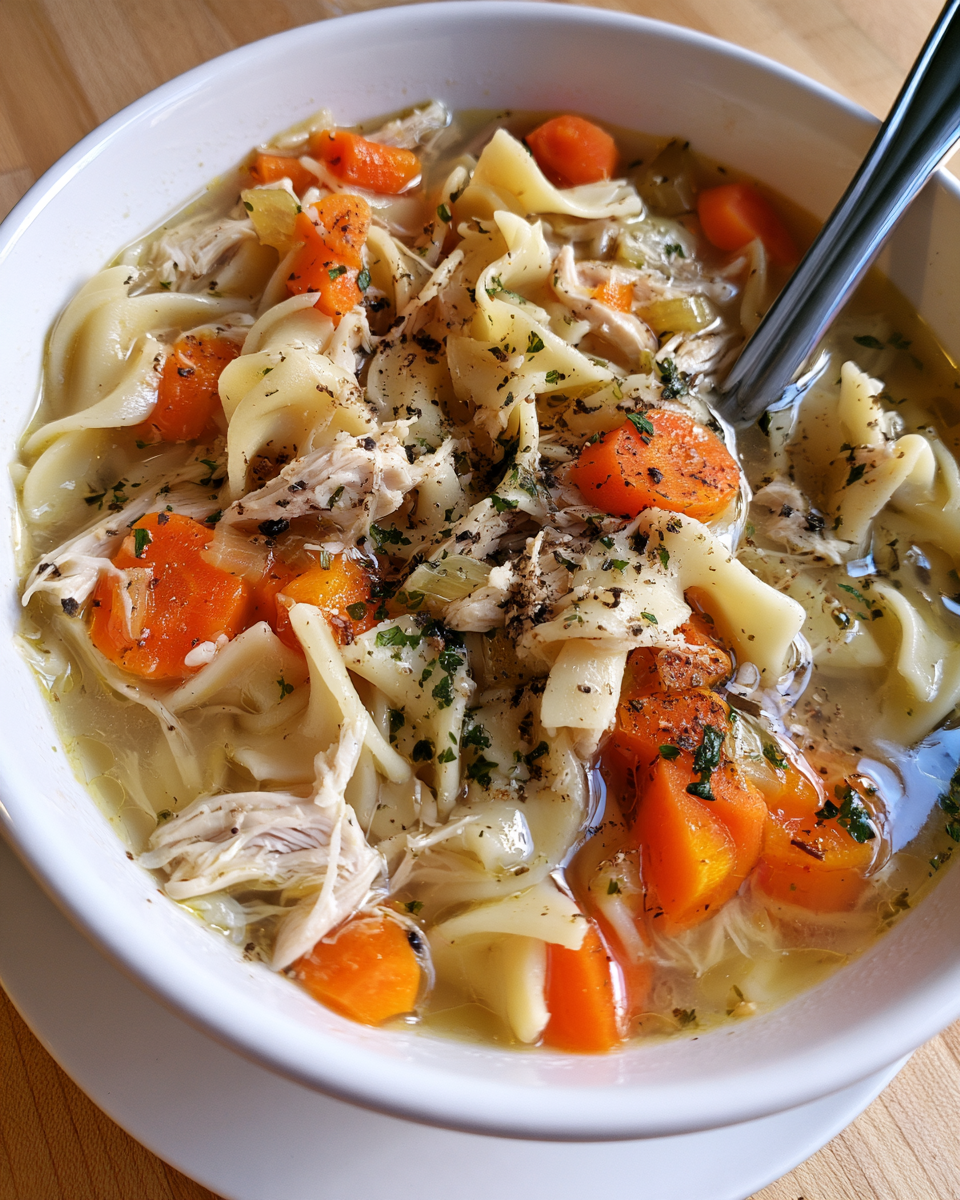
Slow Cooker Chicken Noodle Soup provides a comforting, protein-rich meal prepared with minimal active effort by letting your kitchen appliance simmer ingredients into a hearty broth. This classic dish combines tender poultry, fresh vegetables, and savory aromatics to create a nourishing experience. Mastering this hands-off approach ensures a consistent, delicious result for your busy weeknights.
| Prep Time | Cook Time | Total Time | Servings | Difficulty | Cuisine |
|---|---|---|---|---|---|
| 15 mins | 6 hours | 6 hours 15 mins | 6 | Easy | American |
Why This Recipe Works
Slow cooking allows the chicken to break down perfectly, resulting in incredibly tender meat that shreds effortlessly. By cooking the aromatics and vegetables alongside the poultry, the broth develops a deep, complex flavor profile that stovetop methods often struggle to replicate without hours of active monitoring.
This method saves significant time during the busy evening hours when you need a wholesome meal ready to serve. Using the slow cooker ensures that the chicken remains moist and succulent, while the vegetable infusion provides essential nutrients. It is a reliable technique that delivers professional-level soup in your own home kitchen.
Ingredients
| Ingredient | Quantity | Notes |
|---|---|---|
| Chicken Breast | 1.5 lbs | Use skinless, boneless for best results. |
| Carrots | 3 large | Sliced into thin rounds. |
| Celery | 3 stalks | Diced small. |
| Onion | 1 medium | Yellow or white onion preferred. |
| Garlic | 3 cloves | Minced finely. |
| Chicken Broth | 8 cups | Low sodium ensures better salt control. |
| Egg Noodles | 8 oz | Cook separately to prevent mushiness. |
| Thyme | 1 tsp | Dried, or 1 tbsp fresh. |
| Parsley | 1/4 cup | Freshly chopped for finish. |
Step-by-Step Instructions
Preparation Phase
Combine chicken, carrots, celery, onion, garlic, and broth in the slow cooker basin.
Season the mixture with salt, pepper, and dried thyme.
Secure the lid tightly on the slow cooker to trap heat.
Cooking Phase
Set the appliance to low heat for six hours or high for three hours.
Monitor the liquid levels occasionally to ensure ingredients stay submerged.
Shred the cooked chicken into bite-sized pieces using two forks.
Finishing Phase
Boil egg noodles in a separate pot of water until al dente.
Stir the cooked noodles and fresh parsley into the main pot.
Serve immediately while the soup remains at optimal temperature.
Chef Tips for Perfect Results
Always boil your egg noodles separately so they retain their texture rather than soaking up all the broth.
Use high-quality bone-in chicken if you desire a thicker, collagen-rich broth that mimics traditional long-simmer stocks.
Add fresh herbs like parsley and dill at the very end to preserve their bright color and aromatic profile.
Adjust the seasoning with a splash of lemon juice just before serving to balance the richness of the chicken fat.
Allow the shredded chicken to sit in the broth for ten minutes after cooking to fully absorb the liquid flavors.
Common Mistakes to Avoid
Adding noodles too early turns them into a mushy paste due to overcooking in the slow cooker.
Using only chicken breast can sometimes lead to a dry texture if the meat cooks too long.
Failing to skim the top of the broth leaves excess fat that interferes with the final taste.
Over-salting early in the process creates an unbalanced broth as the liquid reduces slightly during the cooking.
Variations and Substitutions
| Ingredient | Substitution | Impact on Flavor |
|---|---|---|
| Chicken Breast | Chicken Thighs | Adds richness and extra moisture. |
| Egg Noodles | Rice or Quinoa | Creates a gluten-free alternative. |
| Chicken Broth | Vegetable Stock | Provides a lighter, earthier finish. |
Serving Suggestions and Pairings
Pair your soup with a side of crusty sourdough bread or homemade garlic knots to round out the meal. This dish performs exceptionally well at cozy family dinners or when you need a restorative meal during cooler weather seasons. Serve alongside a crisp garden salad to provide a fresh crunch that complements the soft noodles and tender vegetables perfectly.
Storage and Reheating
| Method | Duration | Instructions |
|---|---|---|
| Fridge | 3-4 days | Keep in an airtight container without noodles if possible. |
| Freezer | 2 months | Freeze the soup base and add fresh noodles upon reheating. |
| Stovetop | 5-7 mins | Reheat on medium until bubbling. |
Nutritional Information
| Nutrient | Amount per Serving |
|---|---|
| Calories | 280 kcal |
| Protein | 28g |
| Fat | 6g |
| Carbohydrates | 25g |
| Fiber | 2g |
Note: These are approximate values based on standard ingredients.
Frequently Asked Questions
Can I use frozen chicken in my slow cooker?
Food safety guidelines recommend thawing chicken completely before placing it in the slow cooker to avoid dangerous bacterial growth. Placing frozen meat into a slow cooker prevents the core temperature from rising quickly enough to maintain safe food standards.
How do I prevent the noodles from becoming soggy?
Cook the noodles separately in a stockpot of boiling water and add them to the soup bowl just before serving. This prevents the pasta from absorbing too much broth and losing its structural integrity during storage.
Why is my soup bland?
Adjust the seasoning at the end of the cooking process by adding extra salt, pepper, or a small amount of poultry seasoning. Often, the broth requires an acidic component like lemon or a fresh herb garnish to lift the flavor profile.
Can I add heavy cream for a creamier soup?
Stir in a splash of heavy cream or half-and-half during the final ten minutes of cooking if you prefer a thicker texture. Avoid adding dairy too early, as it may curdle during the extended heating process.
Is this recipe suitable for meal prep?
Divide the finished soup into individual containers and refrigerate for up to four days for easy weekly lunches. Keep the noodles separate until you are ready to heat the soup to ensure the best possible consistency.
In conclusion, Slow Cooker Chicken Noodle Soup remains an essential recipe for anyone seeking efficient, nourishing, and flavorful home-cooked meals. By following these clear instructions, you guarantee a result that satisfies everyone at your dinner table. Experience the deep, savory satisfaction of this classic dish today.